Our story
Vega Propulsion Lab did not begin in a clean laboratory, with funding, mentors, or perfect equipment.
It began with a middle school student in South Korea watching a rocket land on a screen and thinking one simple thought:
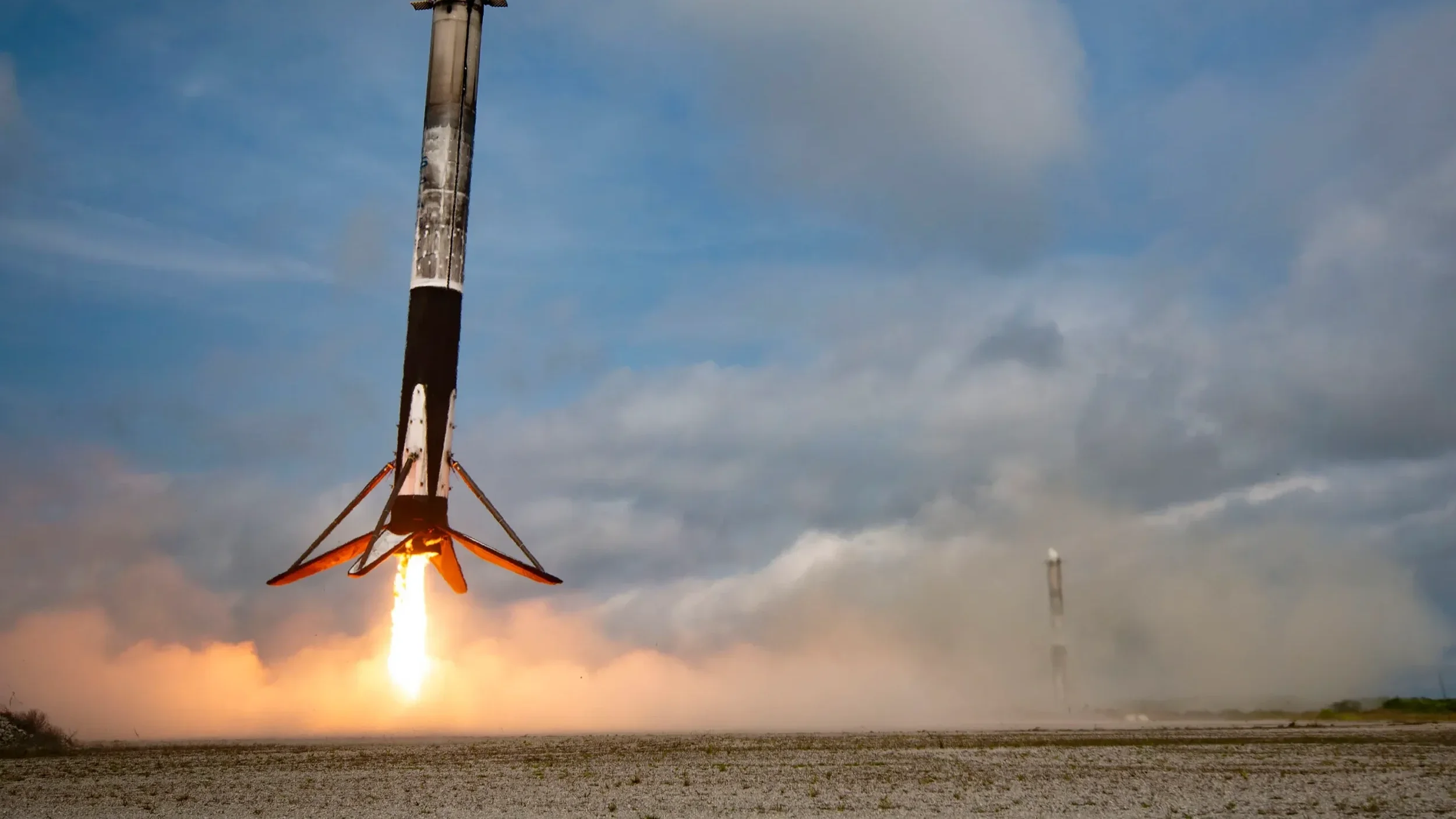
“I want to do that.”
At the time, there was no team, no workshop, no engine, and no clear path forward.
There was only curiosity, a used piece of tissue paper with the word VEGA written on it, and a question that refused to go away:
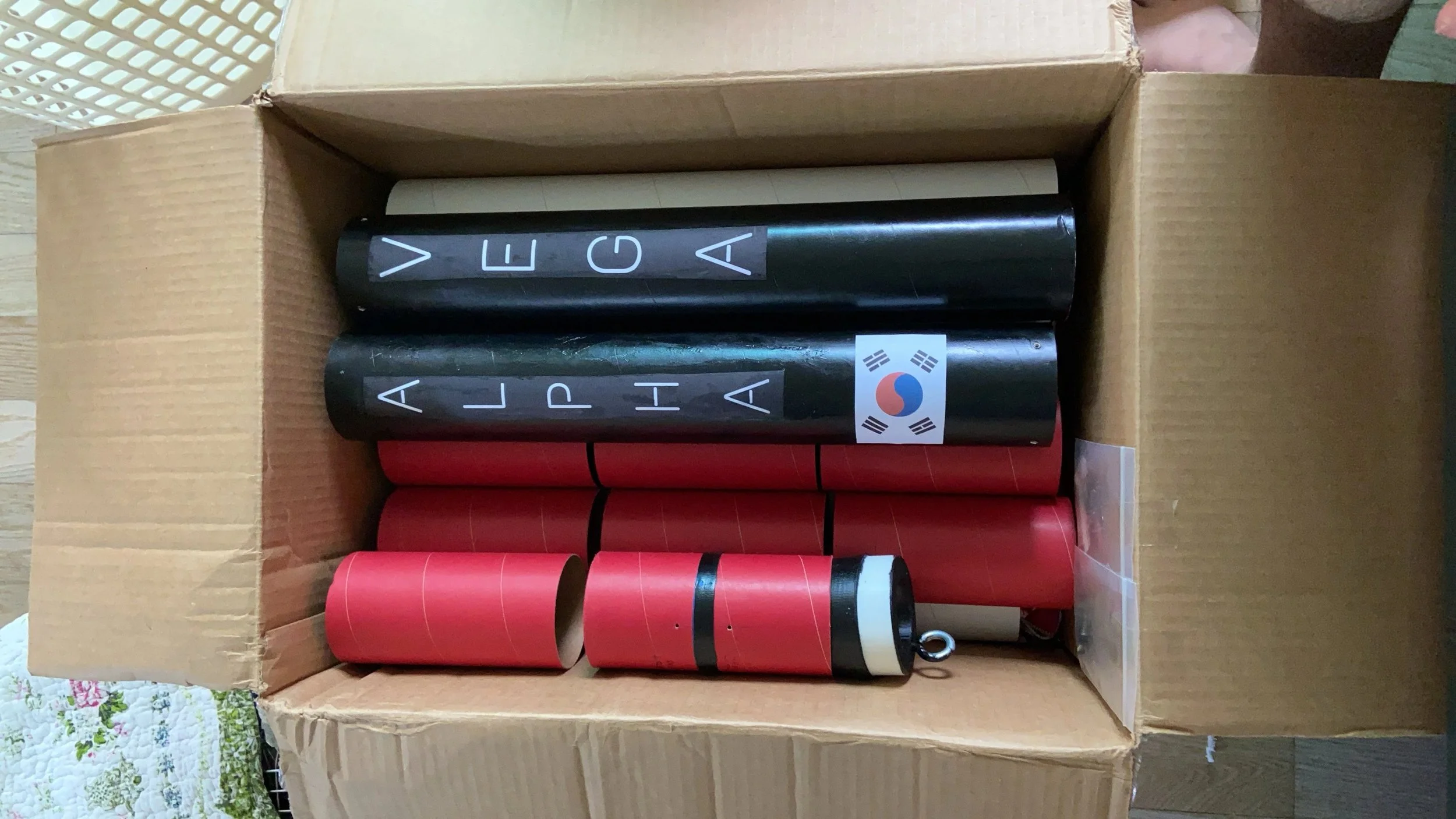
What would it take to build a real rocket?
The answer was not easy to find.
Books explained theory.
Videos showed the results.
But none of them fully explained the reality of building something that had to survive fire, pressure, vibration, electronics, recovery, and flight.
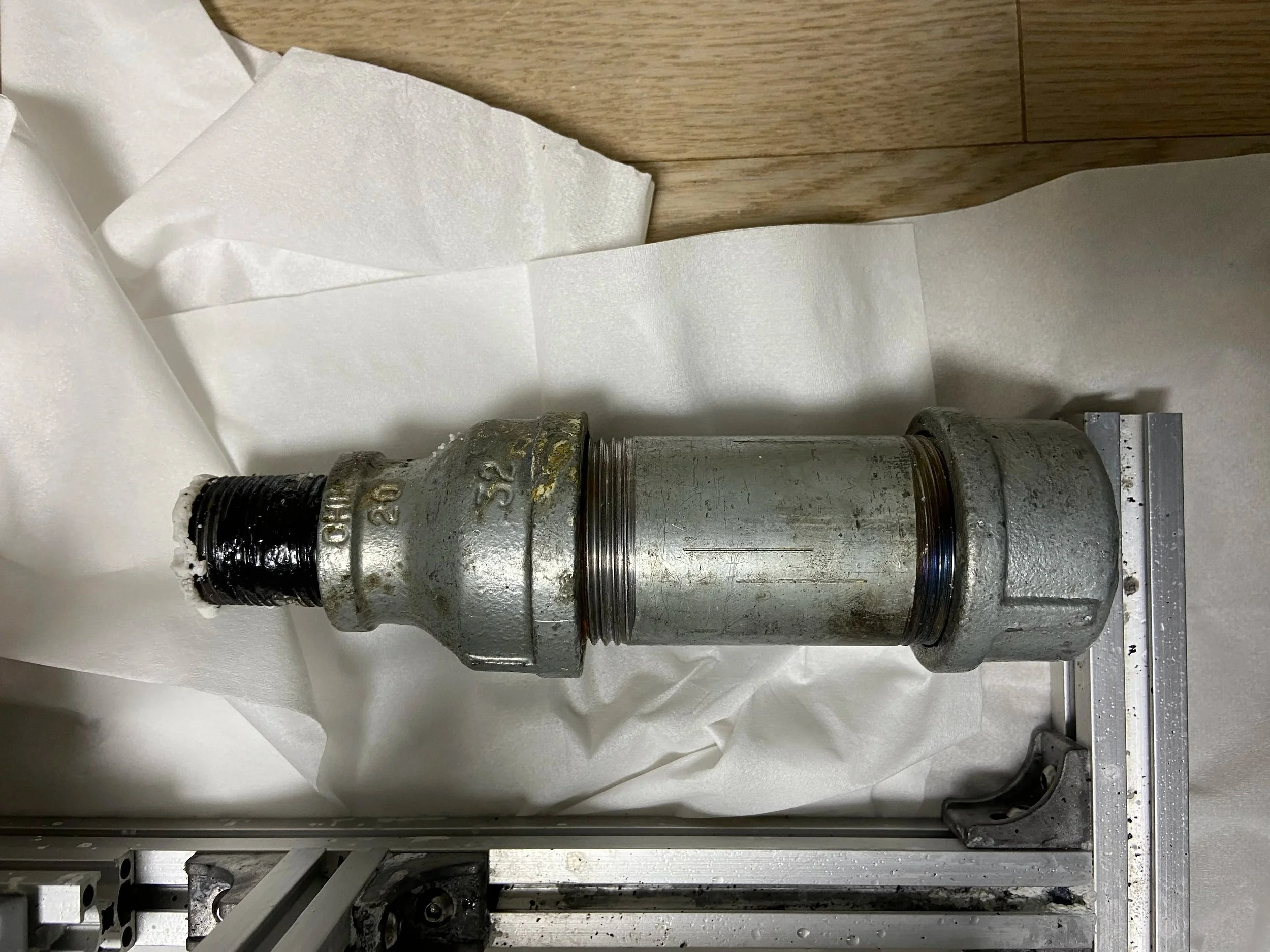
So we learned by doing.
We studied propulsion, avionics, structures, telemetry, and recovery systems from whatever resources we could find.
We raised money by building small software projects. We bought parts piece by piece. When we could not buy a rocket engine, we tried to build one ourselves.
Most of it failed.
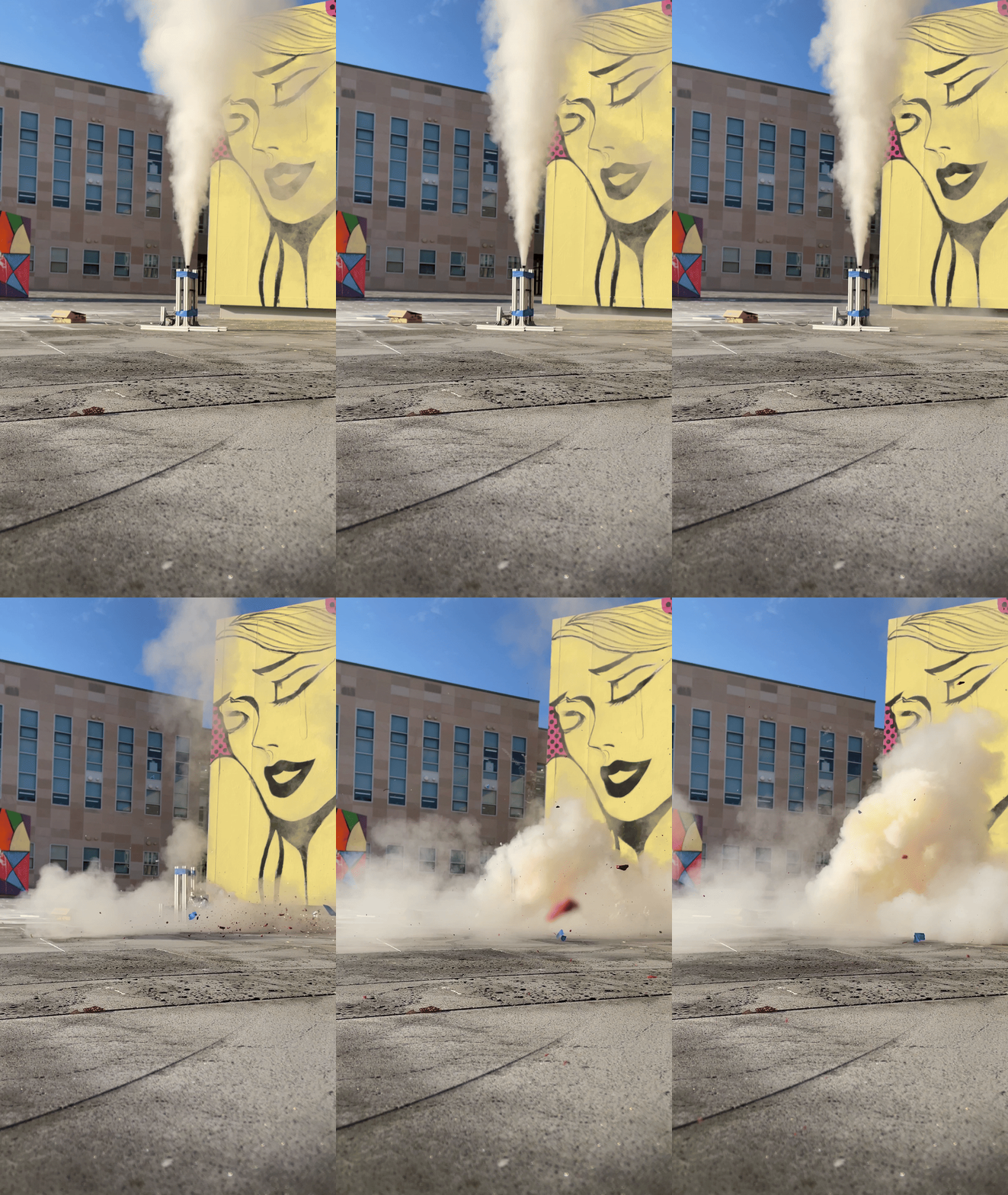
1st Mir v0 combustion test
Early engines did not ignite. Some burned poorly. Some exploded. Nozzles cracked. Fuel formulations had to be changed. Test after test produced more questions than answers. But each failure left behind data, scars, and a better understanding of what real engineering demanded.
Eventually, after repeated failures, the Mir engine completed a successful burn test.
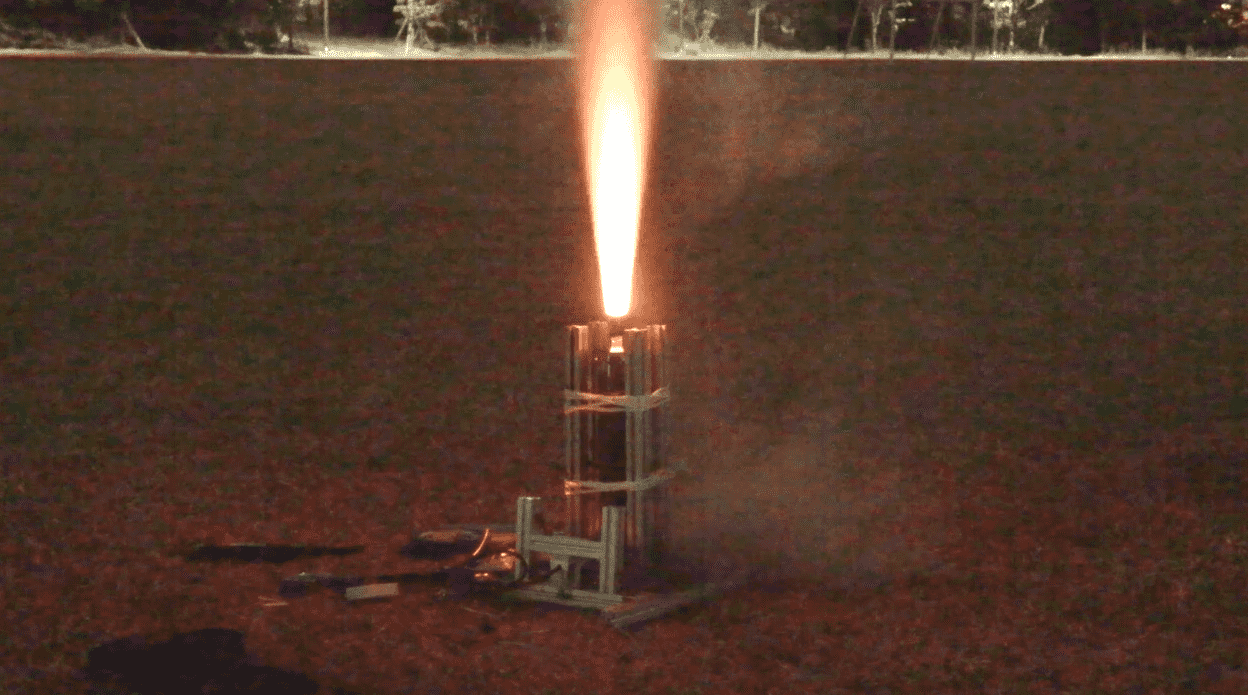
That changed everything.
It proved that Vega was no longer just an idea written on paper. It was becoming a system. A real engineering effort. A project built through trial, documentation, testing, and persistence.
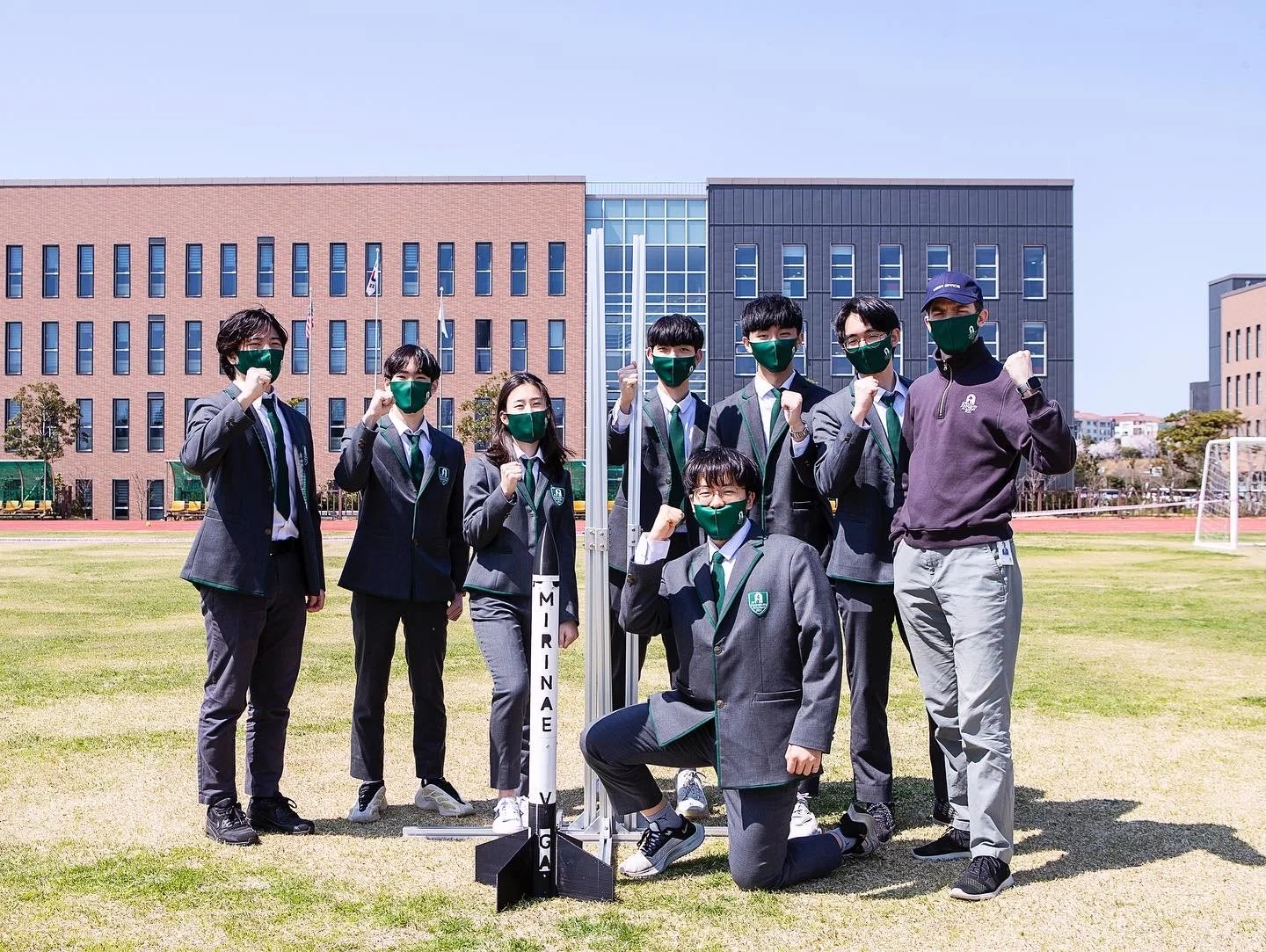
On April 3, 2022, we launched Mirinae, a small student-built sounding rocket from St. Johnsbury Academy Jeju. It was only about one meter long, but inside it carried the structure of a real launch vehicle: a homemade solid rocket motor, a flight computer, a parachute recovery system, and a communication system.
The first flight did not end perfectly.
Due to incomplete combustion, Mirinae failed in the air. But even in that failure, something important had happened.
The rocket had left the ground.

Photo of Mirinae Rocket Lifting off of the launch pad
For us, that moment mattered. It showed that the impossible had moved from imagination into reality. It also taught us that engineering is not proven by avoiding failure. It is proven by what you do after failure gives you the truth.
Seven months later, Mirinae flew again.
This time, it succeeded.
A rocket designed and built by high school students on Jeju Island flew over one kilometer and landed within a safe distance. It was more than a launch. It was proof that young engineers, without perfect resources or permission from the world, could still build serious systems if they were willing to learn, fail, document, and try again.
That became the foundation of Vega Propulsion Lab.
Today, Vega is not just about rockets.
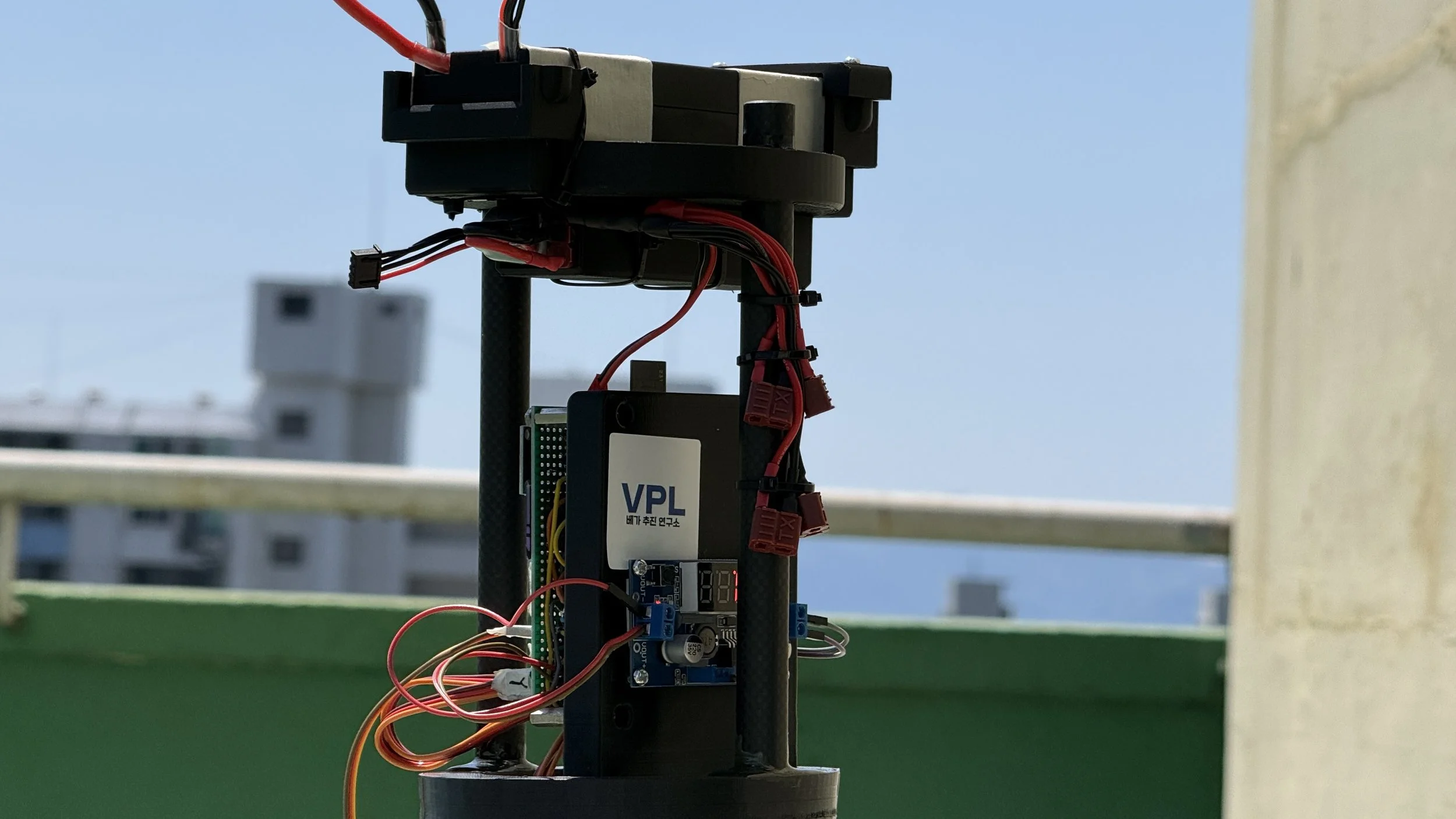
It is about building real engineering systems from the ground up. It is about propulsion, control, avionics, robotics, simulation, and the tools that help students and independent builders turn ambitious ideas into working hardware.
We exist for the people who are told they are too young, too early, too underfunded, or too unrealistic.
Because we know what it feels like to start with nothing but a question.
And we know what can happen when that question becomes a launch.
Vega Propulsion Lab exists to help the next generation of builders dare to venture beyond.